


That ache between your neck and lower back can be easy to misread. Your thoracic spine works with your ribs, muscles, shoulders, and nerves every time you move. The thoracic spine is the middle section of your back. It contains 12 vertebrae, from T1 through T12, and connects with the rib cage.
This region gives your trunk stability while still allowing movement. It also plays a role in breathing because your ribs attach to the thoracic vertebrae and move with your chest. So when something feels different in your upper or middle back, the location is only one clue.
What Is Thoracic Spine Pain?
Thoracic spine pain can have several possible sources, including muscles, ligaments, joints, ribs, nerves, and spinal structures.
You might notice an ache after sitting for hours. Maybe it starts after lifting, twisting, training, or a long drive.
Sometimes the change is clear. You spend Saturday moving furniture. On Sunday, your middle back feels different. Other times, there is no obvious event. That is why the first useful question is not simply, “Where does it hurt?”
Ask instead:
“What changed before I noticed it?”
That question gives you a better starting point for understanding the five things below.
1. Your Thoracic Spine Works With Your Ribs
Your thoracic spine is closely connected to your rib cage. The 12 thoracic vertebrae provide attachment points for the ribs. Together, these structures form part of the thoracic wall that supports movement and breathing.
This connection matters during everyday activities. You rotate your trunk when reaching behind you. You use your upper back when reaching overhead. Your ribs also move when you take a deep breath. So your upper back does not work like an isolated stack of bones. It works with the rib cage during breathing and movement.
Why Does This Connection Matter?
The thoracic spine provides both stability and mobility. Its rib attachments help create a strong frame around your chest. At the same time, the region needs enough movement for rotation and normal trunk function. That is why a change in rib or upper-back movement can be worth noticing. It does not mean a rib problem is causing your symptoms. It simply means the ribs should be part of the bigger picture.
Try This Simple Observation
Notice what happens when you:
- Take a deep breath
- Rotate your upper body
- Reach overhead
- Turn while seated
- Bend forward and straighten
You are not performing a diagnostic test.
You are simply noticing whether your normal movement has changed.
2. Sitting Can Change How You Move
Long periods of sitting can place steady demands on your upper and middle back. You may spend hours at a computer with little change in position. Your shoulders may stay forward. Your upper back may remain in the same position for much of the day.
Cleveland Clinic lists prolonged sitting and posture among possible contributors to thoracic symptoms. Think about a normal workday. You sit at your computer for several hours. Then you stand and reach for something behind you. Does that movement feel the same?
Maybe it does or maybe it does not. The important detail is the change. Your body does not need to hold one perfect posture all day. It needs the ability to move through different positions and tasks.
If your workday involves long periods at a desk, you can also read LifeWorks’ guide to upper-cross posture and movement for more context on how prolonged positions can affect the neck, shoulders, and upper back.
Look at Your Workday
Ask yourself:
- How long do I sit without moving?
- How often do I change position?
- Do I rotate my upper body during work?
- Does standing feel different after sitting?
- Does reaching overhead feel normal?
These questions focus on movement rather than labels.
3. A Change in Activity Can Increase Demand
Your usual activity may feel completely normal. Then you add a new workout, longer hike, heavy lifting session, or weekend project. Suddenly, your thoracic region has a different workload.
Repetitive lifting, bending, and twisting can contribute to overuse problems in the thoracic area. Sudden movements can also strain muscles or other tissues. A sports injury does not need to happen during competition. You can strain your back gardening or lifting a box from the floor. The tissue does not care whether you were wearing a jersey.
Look at what changed before the symptoms appeared.
Did you:
- Increase your training?
- Lift heavier objects?
- Start a new sport?
- Repeat one movement for hours?
- Take on unusual physical work?
That history can help put the symptom into context.
If your upper-back symptoms started alongside training or a change in physical demands, LifeWorks’ Performance Chiropractic is one relevant service to explore. The clinic describes this approach around movement efficiency, control, balance, and coordination.
4. Thoracic Mobility Matters During Daily Movement
Your thoracic spine needs to move during many normal tasks. Rotation helps you turn your trunk. Extension helps you straighten and reach. Flexion allows your upper back to bend forward.
You use these movements without thinking about them. You turn to check your blind spot. You reach across a table. You swing a golf club. You pick something up from the floor.
Now ask yourself: “Has one of these movements changed?”
Maybe turning left feels different from turning right. Perhaps reaching overhead makes you move your trunk differently. Those changes can provide useful information about function.
They do not identify a specific diagnosis. But they can show that your normal movement pattern has changed.
Your Shoulder May Be Part of the Picture
Your shoulder blades sit over the upper ribs. They also move with your arms and work with your upper back during reaching, lifting, and overhead tasks.
That creates a close relationship between your shoulders and thoracic spine. For example, reaching overhead is not just an arm movement.
Your shoulder blade, upper back, ribs, and surrounding muscles all contribute. If you want to understand this relationship in more detail, LifeWorks also has information on shoulder impingement and upper-body mechanics.
5. The Source May Not Be Your Thoracic Spine
This is one of the most important things to understand. Thoracic spine pain does not always come from the thoracic spine itself. Your middle and upper back contain muscles, ligaments, joints, nerves, ribs, discs, and other structures. Problems involving these tissues can create symptoms in similar areas.
Possible contributors include:
- Muscle strain
- Ligament sprain
- Rib injury
- Joint problems
- Nerve irritation
- Spinal conditions
- Repetitive loading
This is why a sore spot does not automatically identify the source. A broader assessment can consider the surrounding structures and how they work together.
Why Does Breathing Matter?
Your ribs and thoracic spine contribute to the mechanics of breathing. The ribs move as the chest expands and contracts. The thoracic region provides attachment points and joints that support this movement.
That gives you another useful observation. Take a normal breath. Then take a deeper breath.
Does your chest expand normally? Do you change your posture to breathe deeply? Does the movement feel different from one side to the other? These observations do not diagnose a thoracic condition.
They simply give you more information about how the area is functioning. If breathing itself becomes difficult, that is different.
Difficulty breathing should receive appropriate medical attention rather than being assumed to come from a muscle or joint.
How Can You Tell If Your Function Has Changed?
Function gives you a practical way to understand what is happening. Instead of asking only, “Where does it hurt?” ask what you can still do.
- Can you turn while driving?
- Can you reach a high shelf?
- Can you sit through your workday?
- Can you rotate during exercise?
Maybe one of these tasks now feels different. Write down what changed.
You can track:
- Reduced upper-back rotation
- Difficulty reaching overhead
- Stiffness after sitting
- Changes during exercise
- Different movement on one side
- Changes when taking a deep breath
You are not trying to diagnose the problem. You are tracking a change from your normal function.
Is Thoracic Spine Pain Always a Spine Problem?
No. The thoracic region includes several structures that work together. Symptoms can come from muscles, ribs, joints, nerves, or other tissues.
This matters because treating one area without understanding the wider movement pattern may miss an important contributor. For example, a change in shoulder movement may alter how the upper back moves. Likewise, a change in thoracic rotation may affect how you reach or turn.
The useful question is:
“What part of the movement has changed?” That question keeps the focus on function.
When Should You Have It Assessed?
Many upper and middle-back symptoms have musculoskeletal causes. But some situations need prompt medical attention. Consider an assessment when symptoms persist, keep returning, or interfere with your normal activities. Seek prompt medical care after significant trauma or when symptoms occur with concerning signs.
These can include:
- New weakness
- Numbness or tingling
- Difficulty breathing
- Fever
- Severe or worsening symptoms
- New bowel or bladder problems
- Symptoms after a serious accident
Persistent or unexplained symptoms also deserve proper evaluation. The important point is knowing when the situation deserves more than self-observation.
How Can LifeWorks Fit Into the Picture?
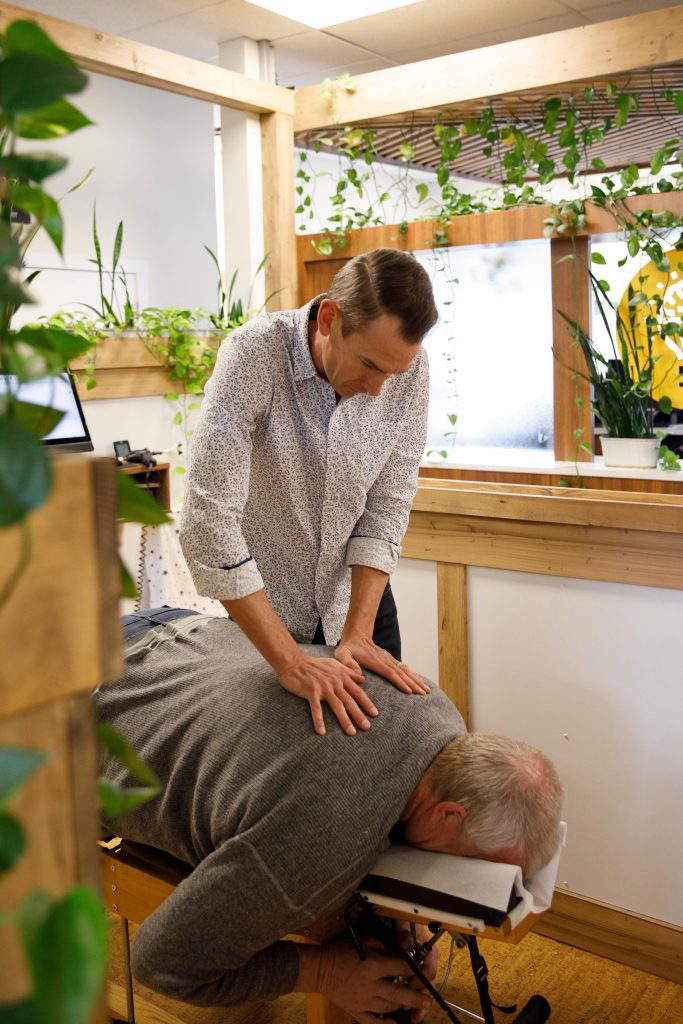
When changes in your upper or middle back affect how you move, it is worth looking at the bigger picture rather than focusing on one area. LifeWorks Family Chiropractic provides Chiropractic Care that looks at spinal alignment, muscle balance, and nervous system function. Their care can include different adjustment techniques based on your individual needs.
For people focused on spinal movement, Chiropractic Back Adjustments are another service listed by LifeWorks. The clinic describes these adjustments in terms of nervous system communication and spinal function.
If your concern started with sport, training, or physical activity, Performance Chiropractic is also relevant because LifeWorks describes it around movement efficiency, control, balance, and coordination.
The right approach depends on the assessment. Some symptoms require medical or other professional care instead. The useful first step is understanding what changed and how it affects your movement.
What Should You Track Before an Appointment?
A short record can make your history easier to explain.
Write down what you were doing when the change appeared.
You can track:
- When symptoms started
- Recent activity changes
- Hours spent sitting
- Movements that feel different
- Changes during exercise
- Breathing changes
- Weakness or numbness
- Activities you have modified
You do not need a complicated diary.
A simple timeline can show what changed before the symptoms appeared.
When should thoracic symptoms be checked?
Persistent, worsening, or activity-limiting symptoms deserve assessment. Symptoms following significant trauma or accompanied by weakness, numbness, breathing difficulty, fever, or other concerning signs require appropriate medical attention.
Your thoracic spine is part of a larger system involving your ribs, shoulders, muscles, and nervous system. What might your everyday movement reveal that the location of the symptom cannot?
FAQs
What is the thoracic spine?
The thoracic spine is the middle section of your spine. It contains 12 vertebrae, labeled T1 through T12, and connects with the ribs.
What can cause thoracic spine symptoms?
Possible contributors include muscle strain, ligament problems, repetitive loading, trauma, joint problems, rib injuries, and spinal conditions.
Does sitting affect the thoracic spine?
Long periods of sitting can place steady demands on the upper and middle back. Prolonged sitting and posture may be relevant factors when looking at changes in movement.
Why is thoracic rotation important?
Thoracic rotation helps with everyday activities such as turning, reaching, lifting, and many sports movements. The region needs both stability and mobility for normal function.
Can the ribs affect thoracic movement?
Yes. The ribs attach to the thoracic vertebrae and move with the thoracic cage during breathing. This creates a close relationship between rib movement and upper-back function.