

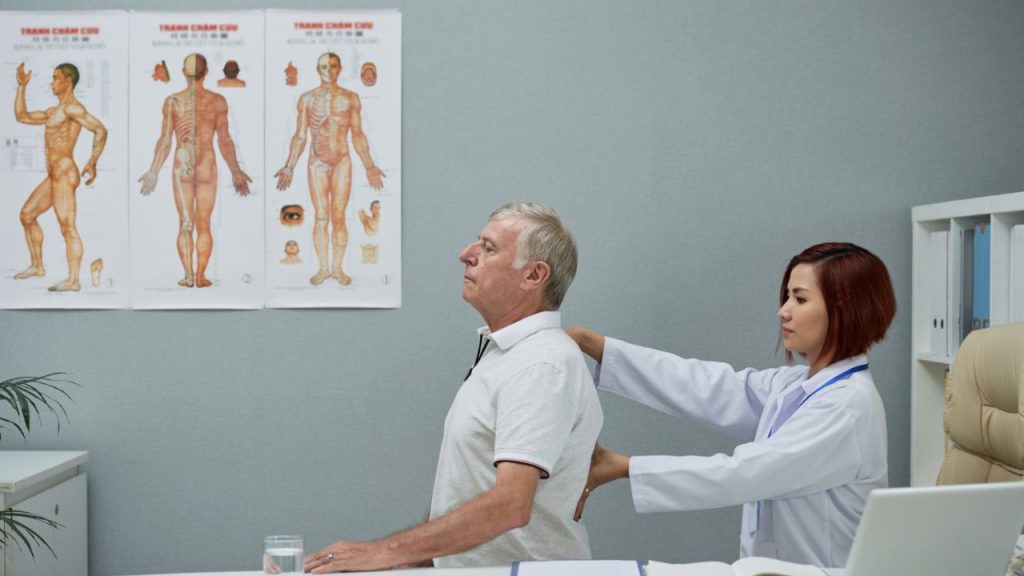
Upper cross syndrome exercises can help fix poor posture by strengthening weak muscles and relaxing tight ones. If your shoulders round forward or your neck feels stiff after desk work, your body may already be showing early signs.
Many people first notice it in small ways. Your neck feels tight at night. Your shoulders feel heavy by evening. You may even see your head leaning forward in photos. That is when people usually ask, Is this just bad posture or something more serious?
Upper cross syndrome is a muscle imbalance pattern. Some muscles become tight. Others become weak. Over time the body adapts to this imbalance. Your head moves forward. Your shoulders roll inward. Your upper back begins to strain.
The good news is that targeted movement can help. Doctors often recommend upper cross syndrome exercises along with posture correction and chiropractic care.
What Is Upper Cross Syndrome?
Picture your upper body like a crossed-up rubber band. Tight chest and neck muscles pull your shoulders forward, while weak upper back and deep neck muscles let your head jut out. This imbalance, called upper cross syndrome, stems from desk jobs, phone scrolling, and bad habits.
It is painful and bothersome if you sit all day. Your shoulders round, head pokes ahead, and pain creeps in. Left unchecked, it strains joints and tires you out. But good news: simple fixes work wonders.
Why These Exercises Beat Bad Posture
Strong posture keeps pain away and boosts energy. These moves target the “why” first: tight pecs and levator scapulae yank everything wrong, weak rhomboids and deep neck flexors can’t fight back.
Doctors push exercises over pills because they rebuild strength and stretch smartly. You retrain your body to hold right. Think of it as gym time for your spine, no fancy gear needed.
Do these exercises suit you? Most people notice shifts in weeks with steady effort. Pair them with expert care at LifeWorks Family Chiropractic in Kelowna for faster healing. The custom adjustments provided in our care make a big difference.
5 Upper Cross Syndrome Exercises Doctors Recommend
These movements target the key muscles involved in posture problems. Perform them slowly. Focus on control.
1. Chin Tucks
This exercise strengthens deep neck muscles. These muscles hold your head upright.
Many people with forward head posture have weak neck stabilizers.
How to perform chin tucks:
- Sit or stand tall
- Look straight ahead
- Pull your chin backward slightly
- Hold for five seconds
- Repeat ten times
The movement feels subtle. But it retrains proper neck alignment.
2. Doorway Chest Stretch
Tight chest muscles pull the shoulders forward. Stretching them helps open the chest and relax the shoulders.
Steps:
- Stand in a doorway
- Place your forearms on the frame
- Step forward slowly
- Feel the stretch in your chest
- Hold for twenty seconds
Repeat three times.
This stretch helps counteract hours of sitting.
3. Wall Angels
Wall angels strengthen the upper back and shoulder stabilizers.
Stand with your back against a wall. Your head, shoulders, and hips should touch the surface.
Move your arms slowly up and down like making a snow angel.
Key tips:
- Keep your back against the wall
- Move slowly
- Squeeze shoulder blades together
This exercise improves shoulder stability.
4. Resistance Band Pull Aparts
This exercise strengthens the rhomboids and rear shoulder muscles.
These muscles keep your shoulders from collapsing forward.
Steps:
- Hold a resistance band with both hands
- Extend your arms in front of you
- Pull the band apart slowly
- Squeeze your shoulder blades together
Perform two sets of twelve repetitions.
This movement builds strength in posture muscles.
5. Thoracic Spine Extensions
The upper back often becomes stiff with poor posture. Limited movement in this area forces the neck to work harder.
Thoracic extensions improve mobility.
You can use a foam roller.
Steps:
- Lie on the floor with a roller under your upper back
- Support your head with your hands
- Gently extend backward over the roller
- Return slowly
Repeat ten times.
Better mobility in the upper back reduces neck strain.
When Exercises Are Not Enough

Exercises help most posture problems. But sometimes other issues are involved.
You may notice:
- Persistent neck pain
- Tingling in the arms
- Frequent headaches
- Limited neck movement
When symptoms continue, professional care may help. Chiropractic treatment can restore spinal motion and reduce nerve pressure.
Visit LifeWorks Family Chiropractic. Combine exercises with the chiropractic adjustments. Many gain from Peripheral Neuropathy Relief for arm or hand nerve issues. This duo boosts muscle balance and nerve health fast.
How Peripheral Neuropathy Relief Works
Visit LifeWorks Family Chiropractic for this program. It uses gentle chiropractic adjustments. Targeted therapies calm irritated nerves. You ease pain in your arms and hands fast.
Custom plans hit root causes. No drugs or surgery needed. Many feel relief in weeks. Combine with posture exercises for top results.
Our team handles every step with full checks. We link posture issues to tingling fast. Safe tools boost blood flow. Patients leave taller and pain-free.
Habits That Improve Posture
Exercises work best when daily habits also improve.
Look at your work setup. Small changes can make a big difference.
Helpful habits include:
- Keep screens at eye level
- Take posture breaks every thirty minutes
- Avoid looking down at phones for long periods
- Strengthen upper back muscles regularly
These changes support the results of upper cross syndrome exercises and prevent the posture pattern from returning.
Real Questions People Ask
Many people hesitate before seeking care. The questions often sound familiar.
Is my posture problem serious?
Can exercises really fix it?
Should I try chiropractic treatment?
If discomfort is mild, exercises may help quickly.
If symptoms keep returning, an assessment can reveal the cause. Early care often prevents long-term pain.
Programs such as Peripheral Neuropathy Relief may also help when posture problems affect nerve function.
The Key Takeaways
Upper cross syndrome develops when chest and neck muscles tighten while upper back muscles weaken. This imbalance pulls the body forward and strains the neck.
Simple exercises can restore balance. Chin tucks, wall angels, and thoracic extensions strengthen posture muscles and improve mobility.
Professional care may help when symptoms persist. Clinics like LifeWorks Family Chiropractic often combine posture exercises with chiropractic treatment and nerve support programs such as Peripheral Neuropathy Relief.
Your posture reflects the habits you repeat every day. The real question is simple.
Will you correct the pattern now, or wait until your body forces you to? Contact us now!
One Response