

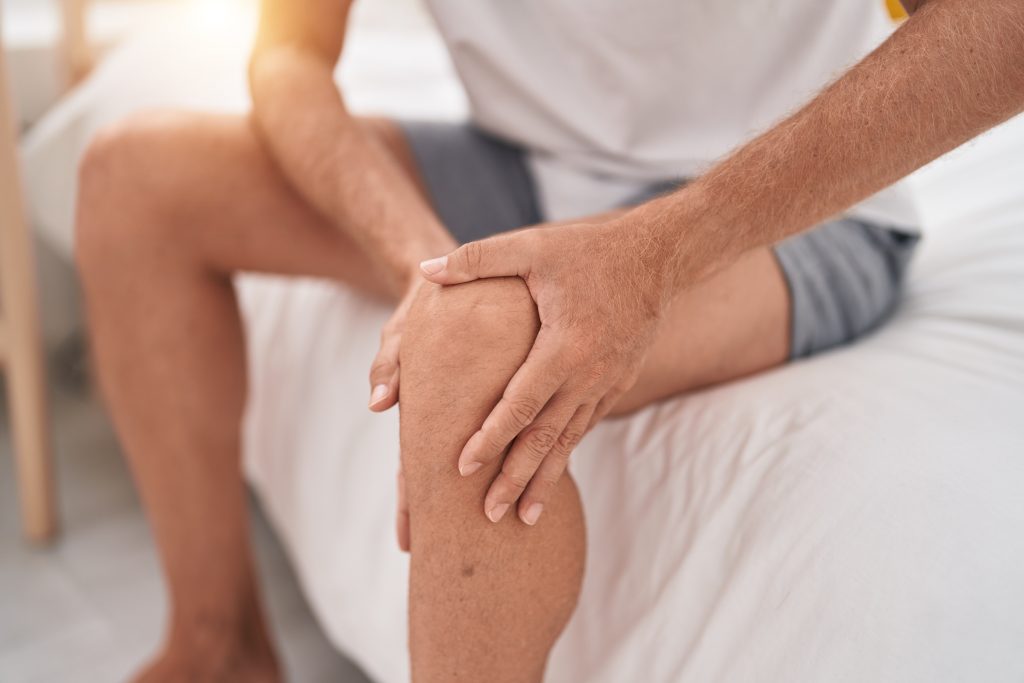
Pain on the outside of the knee joint can have several causes, including activity changes, injuries, joint changes, and soft-tissue problems. The useful clue is what changes when you move, rest, bend, or put weight through your leg.
Your knee handles work all day. You walk, climb stairs, sit, stand, squat, and change direction without much thought. Then something changes, and a simple task feels less natural.
Maybe you notice it while running. Perhaps stairs feel different. You might even notice the change after sitting for a long time.
That pattern matters, outer knee symptoms can involve the iliotibial band, meniscus, ligaments, tendons, arthritis, and other structures. Cleveland Clinic notes that symptoms can also change with movements such as bending, straightening, or using stairs.
So instead of asking only, “Why does my knee hurt?” ask yourself: “What changed in how my knee moves or handles my normal activities?” That question gives you a better starting point.
1. A Change in Your Activity May Be the First Clue
Your knee responds to the demands you place on it. A sudden increase in running, hiking, cycling, sports, or gym work can change how your knee handles load. Repetitive movement can also contribute to problems around the outer knee.
Imagine you normally run twice each week. Then you start training for a race and double your distance. Your first few runs seem fine, but the outside of your knee starts feeling different later. Would you blame the knee alone? It may be more useful to look at what changed first.
Ask yourself:
- Did your exercise time increase?
- Did you start a new activity?
- Are you running more hills?
- Did you change your usual route?
- Are you spending more time on stairs?
Your body may be responding to a new demand. That does not identify the exact cause, but it gives you an important clue.
2. Repetitive Movement May Point Toward the IT Band
The iliotibial band runs along the outside of your thigh and attaches near the upper shin. Iliotibial band syndrome can affect runners and people who repeat movements such as cycling. Symptoms often become noticeable during activity and may increase as the activity continues.
You may notice a very specific pattern. Your knee feels fine while walking around the house. Then you run for several minutes and notice the outer knee. Perhaps the same thing happens at roughly the same point each time.
That timing is worth noting. It does not prove you have an IT band problem. Other conditions can create similar symptoms. Still, knowing what activity changes the pattern can help during an assessment. Track the activity, duration, surface, and movement that seem to affect your knee.
3. A Twist or Impact May Point Toward an Injury
Some knee problems begin with a clear event. A sudden twist can affect the meniscus. A force from the side can injure the lateral collateral ligament. A fall or direct impact can also affect structures around the outside of the knee.
The event does not have to happen during a major game. You could twist your knee stepping off a curb. You might stumble while carrying groceries. You could change direction quickly while playing with your children.
Sometimes the moment seems minor. Then your movement changes. Maybe you should avoid stairs. Perhaps you stop turning on that leg. You might also notice swelling, clicking, instability, or trouble fully bending or straightening your knee. Those details can help guide an appropriate assessment. If the symptoms follow a significant injury, do not try to identify the structure yourself.
4. Joint Changes Can Affect Everyday Function
Your knee is more than a simple hinge. Several structures work together to support walking, standing, bending, and other daily tasks. Changes within the joint can affect how comfortably and confidently you perform those tasks. Osteoarthritis is one possible contributor to outer knee symptoms. Meniscus problems can also affect the lateral side, particularly after twisting or loading the knee. Think about your normal day.
Can you get out of a chair without changing how you move? Can you climb stairs with your usual control? Can you squat to pick something up? Can you fully straighten your leg? These questions shift the focus toward function. That matters because your knee has a job to do. The goal is to understand how well it handles the demands of your life, rather than judging everything from one symptom.
5. Your Movement Pattern May Offer Another Clue
Your knee does not work by itself. Your hip, pelvis, ankle, and lower leg all contribute to movement. When your movement changes in one area, other parts may handle different demands.
That does not mean a problem in your hip automatically causes a knee problem. It means your overall movement pattern can provide useful information when symptoms keep returning. For example, your knee might feel fine during a short walk. But stairs, squats, or repeated bending may feel different.
So look at what your knee can do.
- Can you walk at your normal pace?
- Can you climb stairs with good control?
- Can you squat without changing your form?
- Can you fully bend and straighten your knee?
- Can you take part in your usual activities?
These questions can tell you more about function than one symptom rating.
What Other Symptoms Should You Notice?
The outside of your knee is only one part of the picture. Notice whether you also have swelling, bruising, clicking, warmth, skin changes, stiffness, or trouble moving the joint. These details can help describe the pattern more clearly.
For example, clicking after a twist tells a different story from gradual symptoms after increased running. Swelling after an injury also gives different information from mild symptoms that appear during repeated activity. You do not need to diagnose yourself from these signs. Simply note what you observe.
Where Exactly Do You Notice the Symptoms?
The exact location can provide another useful clue. You might feel symptoms directly beside the knee joint. You might notice them farther up the outer thigh. Some people notice symptoms toward the back and outside of the knee. Location alone cannot confirm a diagnosis.
Still, telling a healthcare professional where you feel it, when it starts, what it feels like, and which movements change it can make your history more useful. Cleveland Clinic recommends describing these details during an assessment.
For example, symptoms after repeated running create a different pattern from symptoms that began immediately after a twist. The clearer the pattern, the more useful your next step can be.
What Makes Outside Knee Symptoms Change?
Your activity can provide important information. Notice whether your symptoms change during:
- Running or jogging
- Cycling
- Walking downstairs
- Squatting
- Bending and straightening
- Long periods of sitting
- Quick changes in direction
You do not need to avoid every activity that feels different. Instead, pay attention to what your knee can handle and how your movement changes afterward. If an activity repeatedly changes your movement or makes you avoid normal tasks, that is useful information to discuss during an assessment.
What Does Better Knee Function Look Like?
Improvement does not always mean a symptom disappears first. You might notice that you can walk farther. Perhaps stairs feel more natural. Maybe you can complete your usual workout without changing how you move.
Those are meaningful changes. Think about what your knee needs to do each day. If you enjoy hiking, uneven ground matters. If you work on your feet, walking capacity matters. If you play tennis, quick direction changes matter. Your goals should fit your life.
The better question is not simply, “Does my knee feel different?” Ask: “Can my knee handle more of the things I need and enjoy doing?” That keeps the focus on function and capacity.
When Should You Have Your Knee Assessed?

You do not need to wait until your normal routine becomes impossible. Consider an assessment if symptoms persist, affect your daily routine, or cause you to avoid activities you normally do. Cleveland Clinic recommends seeing a healthcare provider when outer knee symptoms last more than a few days or interfere with normal activities.
You should seek prompt medical attention after a serious injury, especially if you cannot move or use the knee. A badly swollen or misshapen knee, or a hot knee with fever, also warrants urgent medical advice. The point is not to diagnose yourself from an article. It is to recognize when the pattern deserves a closer look.
When Your Knee May Not Be Working Alone
Sometimes the spot where you notice a symptom is not the only area worth considering. Your spine, hips, pelvis, and lower limbs all contribute to movement. Looking at these relationships may provide useful context when the same movement pattern keeps showing up.
At our Chiropractic Care we use Torque Release Technique, which is one of several gentle techniques we use in our practice. The clinic describes this approach as low-force and highly controlled, while its sports chiropractic service focuses on how your body moves, carries weight, and supports an active lifestyle.
This does not mean every knee problem needs chiropractic care. Some conditions need medical, orthopedic, physiotherapy, or other forms of assessment.
At LifeWorks Family Chiropractic, the focus can be on understanding how your body moves and functions rather than looking at one symptom in isolation.
What Should You Track Before an Appointment?
You do not need to diagnose yourself. A short record can help you describe the pattern clearly. Keep it simple for several days.
Track:
- Where you notice the symptoms
- When you first noticed them
- Which activities change them
- Whether stairs affect your movement
- Any swelling or clicking
- Any recent injury
- Changes in your exercise routine
- What feels different the next morning
For example, your knee may feel fine during a ten-minute walk but change after thirty minutes. That difference matters. It tells you something about your current activity capacity.
FAQs
What can cause symptoms on the outside of the knee?
Common causes include IT band syndrome, meniscus injuries, LCL injuries, arthritis, tendon problems, and other knee conditions.
Can running affect the outside of my knee?
Yes. Repetitive running can contribute to IT band syndrome and other overuse patterns. Changes in distance, hills, or training load may also affect how your knee responds.
When should I have my knee checked?
Consider an assessment when symptoms persist, change your normal activities, or make you avoid movements you usually perform. Seek urgent care after a significant injury or when you cannot use the knee.
Can movement patterns affect knee function?
Your knee works with your hip, pelvis, ankle, and other structures during movement. Looking at the broader pattern can provide useful context when the same problem keeps returning.
The location of your knee symptoms is only one clue. What your knee can handle during the activities that matter to you may tell you much more about what deserves your attention next.