


Middle back pain causes often involve movement, muscle load, rib motion, or nervous system responses. Yet one symptom cannot reveal one exact cause. The better question is how your breathing, movement, and daily function have changed.
Your middle back sits between your neck and lower ribs. Healthcare providers call this region the thoracic spine. It supports your rib cage and protects important nerves. It also works with your shoulders during reaching and lifting.
At LifeWorks Family Chiropractic, the focus extends beyond one sore area. Your spine, ribs, muscles, breathing, sleep, stress, and nervous system all interact. Understanding those links can support clearer decisions.
Why Middle Back Symptoms Can Be Hard to Explain
Perhaps you notice stiffness after several hours at your desk. Maybe twisting towards the back seat suddenly feels limited. Another person may feel a change while breathing deeply or lifting groceries.
These patterns do not always share one cause. Muscle strain, repeated loading, joint changes, injuries, and health conditions may all contribute. Symptoms can also come from areas outside the spine.
That is why self-diagnosis can lead you down the wrong road. Your symptoms offer clues, but they are not the full answer. Assessment may consider movement, strength, sensation, breathing, and medical history.
Instead of asking, “How do I stop this feeling?” ask something more useful. Which movements, tasks, or daily habits have changed?
Clue 1: Notice Which Movements Have Changed
Your thoracic spine helps you turn, reach, bend, and stay upright. It does not move as freely as your neck or lower back. The ribs attached there add support and stability.
Repeated lifting, bending, twisting, or long desk hours may increase demands on nearby muscles. Sudden movement may also strain muscles or ligaments. Yet the same movement can affect people differently.
Think about yesterday’s routine. Did you carry a heavy bag on one shoulder? Did you reach across your desk repeatedly? Did you spend hours leaning towards one screen?
Those details can explain more than the symptom location. They show how your body shares load during real tasks.
Watch for changes during:
- Turning while driving
- Reaching into a cupboard
- Lifting a child or bag
- Sitting through long meetings
- Rolling over during sleep
- Standing after desk work
Do not assume one movement is harmful forever. Your body is strong and built to adapt. The goal is learning which demands currently exceed your capacity.
A useful question is not, “Is my posture bad?” Ask whether your posture can change easily. There is no single correct position for every person. Regular movement often matters more than holding one pose.
Clue 2: Pay Attention to Breathing and Rib Movement
Your ribs connect with the thoracic spine. They move as you breathe, cough, laugh, and turn. Muscles around the ribs also support posture and upper-body movement.
You may notice middle back pain between shoulder blades during a deep breath. That pattern can involve muscles, ribs, joints, or other structures. It should not be diagnosed from location alone.
Try one calm breath while sitting. Does your rib cage expand around the front, sides, and back? Or do your shoulders lift while the middle back stays guarded?
Stress can also change breathing. You may take short breaths while working or driving. The muscles around your neck and upper back may then work harder.
This does not mean breathing caused the whole problem. It simply offers another clue about coordination. Your nervous system, breathing, and muscle tone influence one another.
You can observe:
- Whether deep breathing changes symptoms
- Whether coughing creates a sharp change
- Whether one side moves less
- Whether your shoulders rise during each breath
- Whether stress makes your body brace
Breathing-related back symptoms sometimes come from the heart, lungs, or other organs. Sudden chest pressure, shortness of breath, sweating, or coughing blood needs urgent care. Back symptoms with serious chest signs should never be treated as posture problems.
Clue 3: Look Beyond the Desk Chair
Long sitting often gets all the blame. Yet your whole day matters more than one chair. Sleep, stress, lifting, activity, and recovery all shape your capacity.
A busy week may include poor sleep and several long drives. Then weekend gardening adds more twisting and lifting. Your middle back may respond to the total load.
This is why middle back pain causes should be viewed as patterns. One movement may not be the main issue. The combined demand may matter more.
Ask yourself:
- Did my activity change recently?
- Have I slept less than usual?
- Am I carrying more at work?
- Have I stopped doing normal exercise?
- Does stress make me brace?
- Did symptoms follow an injury?
Desk work and inactivity can contribute to mid-back stiffness. Heavy bags, strains, stress, and poor sleep may also matter.
But sitting itself is not automatically dangerous. Your spine is robust and designed for many positions. Regular movement and gradual activity can support health and function.
Try making one small change first. Move your screen closer or share carrying between both hands. Stand before your body feels locked.
Small changes provide clearer feedback. Changing six things at once creates guesswork. Your body is not a faulty machine needing endless adjustments.
Clue 4: Understand Protective Muscle Guarding
Your nervous system constantly gathers information from your body. It helps guide balance, muscle control, breathing, and movement. Thoracic nerves also carry messages between your brain and muscles.
When movement feels uncertain, your body may increase muscle tension. This protective response can feel stiff or restrictive. It may help for a short period.
Sometimes that pattern continues after the first strain settles. You may keep moving around one side. You may also avoid turning or breathing deeply.
Symptoms and tissue damage do not always increase together. A strong sensation does not prove severe damage. A mild sensation does not rule out medical concerns.
A more useful question is, “Why is my body still guarding?” Sleep, stress, fear, movement habits, and physical load may all influence that response.
Better adaptation may look like:
- Turning with less hesitation
- Breathing without shoulder tension
- Reaching with better control
- Tolerating more daily activity
- Recovering faster after work
- Feeling steadier during lifting
Recovery rarely follows a straight line. Good days and difficult days can both occur. Look at function across several weeks, not one afternoon.
Your body has built-in processes that support regulation and adaptation. Those processes still need the right medical guidance when warning signs appear.
When Middle Back Changes Need Medical Assessment
Most upper and middle-back problems involve muscles or joints. Yet some symptoms may come from fractures, nerve conditions, or internal organs.
Seek prompt medical assessment after a fall, collision, or direct blow. People with osteoporosis may face greater fracture risk. Persistent night symptoms also deserve professional review.
Get urgent help for:
- Chest pressure or breathing trouble
- Sweating, nausea, or faintness
- Coughing blood
- Sudden limb weakness
- New numbness or poor coordination
- Bladder or bowel changes
- Severe symptoms after trauma
Do not rely on stretching or manual care when these signs appear. Medical assessment must come first. A provider can decide whether imaging or referral is needed.
What Can You Track Before an Assessment?
A short record can make your appointment more useful. You do not need a complicated health diary. Write down changes that affect your daily function.
Include:
- When the symptoms began
- Which movements change them
- Whether breathing affects them
- Recent falls or injuries
- Changes in sleep or activity
- New weakness or numbness
- Tasks you can no longer manage
These details help your provider understand the pattern. They also reduce the urge to guess one diagnosis from one sensation.
Where Chiropractic Care May Fit
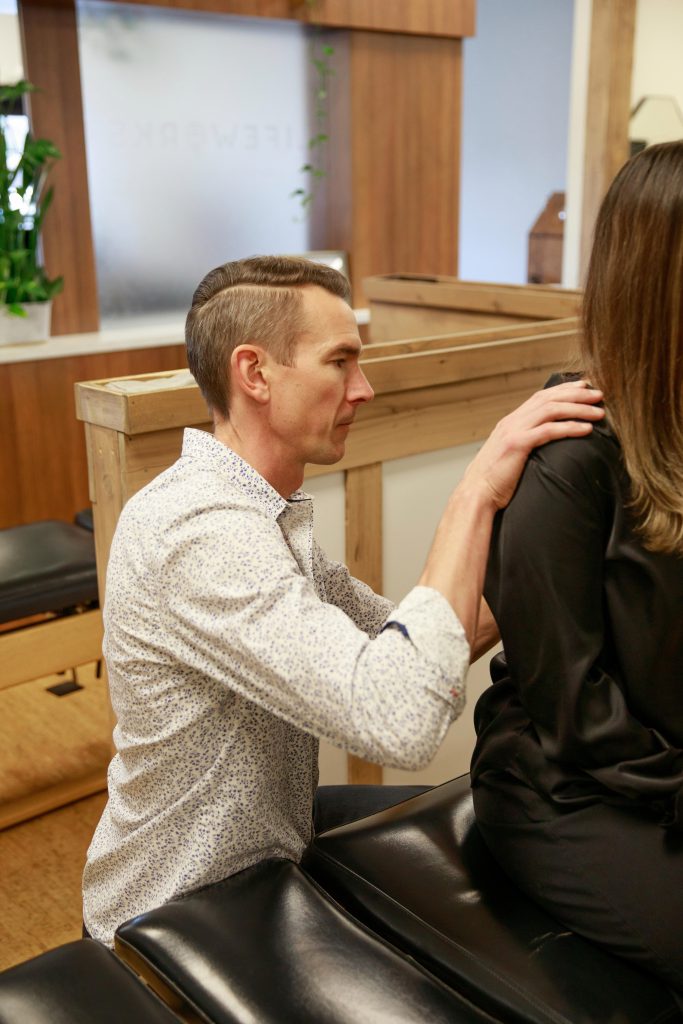
Once urgent medical concerns are assessed, Chiropractic Care may complement a broader plan. Assessment may consider spinal movement, muscle balance, posture, and nervous system communication.
The goal should not be chasing a single symptom. It should explore why turning, lifting, breathing, or sitting has changed. Functional goals can then guide each decision.
At LifeWorks Family Chiropractic, the service description presents a whole-body approach. It considers structural alignment, muscle balance, and nervous system communication. The clinic also lists several controlled and low-force techniques.
Chiropractic Care should support education and self-management. You should understand what your provider found. You should also know which habits you can manage independently.
Ask questions such as:
- Which findings guide this plan?
- Which functions will we track?
- What can I safely do myself?
- When should medical review occur?
- How will we know care should change?
Clear answers help prevent fear and dependency. Good care should build knowledge, confidence, and resilience.
Where Acupuncture Kelowna May Fit
Acupuncture Kelowna may also complement wider care after appropriate screening. A registered acupuncturist should review your health history and functional goals.
The LifeWorks service combines traditional acupuncture with anatomical and neuromuscular training. Its current page also describes functional benchmarks and coordinated team care.
A plan may consider muscle tone, sleep, stress, and movement tolerance. Every person responds differently. No provider should promise one guaranteed result.
Before choosing Acupuncture Kelowna, discuss medicines and health conditions. Mention pregnancy, skin concerns, or needle anxiety. Clear information supports safer and more personal decisions.
Use the Clues to Ask Better Questions
Understanding middle back pain begins with seeing the whole pattern. Notice movement, breathing, daily load, sleep, and nervous system responses. Then watch how those factors affect real tasks.
At LifeWorks Family Chiropractic, the focus remains education and function. Your middle back is not working alone. It is adapting with your ribs, shoulders, muscles, breathing, and nervous system.
The most useful question may not be, “When will this feeling stop?” Ask, “What does my body need to move, breathe, and function well?”
Frequently Asked Questions
What are the most common middle back pain causes?
Common patterns include muscle strain, repeated lifting, long sitting, and sudden twisting. Rib movement, sleep, stress, and activity changes may also affect function. Symptoms alone cannot confirm the exact cause. An assessment may help when movement keeps changing.
Can sitting for long periods affect the middle back?
Long sitting can increase stiffness and muscle demand for some people. The chair is rarely the only factor involved. Screen position, breathing, stress, and movement breaks also matter. Regular position changes may support better daily function.
Why does my middle back hurt when I breathe?
Your ribs connect with the thoracic spine and move during breathing. Muscles and joints around this area may influence that movement. Breathing changes can also involve the lungs, heart, or other organs. Seek urgent care for chest pressure, breathlessness, sweating, or faintness.
When should middle back symptoms be medically assessed?
Seek prompt care after a fall, collision, or direct injury. New weakness, numbness, poor balance, or bladder changes also need assessment. Get urgent help when symptoms occur with chest pressure or breathing trouble. These signs require medical review before clinic-based care.