


That tight spot between your neck and shoulder can change how your whole upper body moves. You may notice it when turning your head, lifting your arm, or sitting at your desk.
The levator scapulae connects your upper neck to your shoulder blade. It helps elevate the shoulder blade and assists with neck movement.
When your routine changes, repeated tasks increase, or your neck and shoulder move differently, symptoms may appear around this area. The key is not just where you feel the change. It is what changed, which movements affect you, and whether your normal function has changed.
Why Does Your Levator Scapulae Hurt?
Levator scapulae pain can have several possible contributors, including repeated movement, activity changes, posture, and altered neck or shoulder function.
You may notice symptoms after hours at a computer. They may also appear after driving, lifting, training, or sleeping in one position.
The levator scapulae runs from the transverse processes of C1 through C4 to the medial border of the scapula. Its main role is to elevate the scapula. It also assists with neck extension, rotation, and side bending.
That connection makes the neck and shoulder worth considering together. So before you blame one muscle, ask:
What changed before you noticed the difference?
Maybe you started a new workout. Perhaps your work hours increased. You may have spent more time driving or changed your sleeping position. Those details can help reveal the pattern.
Where Do You Feel Levator Scapulae Pain?
The levator scapulae sits deep around the side and back of the neck. It reaches down toward the upper inner part of the shoulder blade.
You may notice a change in one or more of these areas:
- Side or back of the neck
- Top of the shoulder
- Upper inner edge of the shoulder blade
- Area between the neck and shoulder
The exact location still does not confirm the source. Several muscles, joints, nerves, and shoulder structures sit close together. Symptoms from one area can sometimes feel like they come from another. That is why location is useful, but it should not be treated as a diagnosis.
What Does the Levator Scapulae Do?
Understanding the muscle makes the symptoms easier to put into context. The levator scapulae attaches to the upper cervical spine and the medial border of the scapula. It helps raise the shoulder blade and contributes to neck movement.
It also works with other muscles around the shoulder blade. Your shoulder needs coordinated movement between the scapula and upper arm. This allows the arm to move through a wide range while the shoulder remains stable.
So, the muscle is not working in isolation. Its job makes activities involving your neck, shoulder, and arm relevant when you notice a change.
1. Long Desk Hours
Hours at a computer can keep your neck and shoulders in one position. If your screen is low, you may spend more time looking down. If your shoulders stay raised, the muscles around the shoulder blade may face more demand.
But posture alone does not prove the cause. Look at what happens during your workday. Does your neck move often? Do you raise one shoulder while typing? Does your position change when you become tired? These details can tell you more than simply labeling your posture as “bad.”
2. Repeated Overhead Movement
Your neck and shoulder handle many repeated tasks. Swimming, lifting, throwing, reaching, painting, and overhead work can all place repeated demands on the shoulder and upper back.
The levator scapulae works with other scapular muscles during shoulder movement. A sudden increase in these activities can change your normal workload. Think about the week before your symptoms appeared.
Did you increase your training? Take on a new task? Spend more time reaching overhead? That change may be an important clue.
3. A Sudden Increase in Activity
Your body may handle your usual workload without much trouble. Then you add a long workout, a new sport, or several hours of physical work. That changes the demand.
A muscle strain can occur after lifting, sports activity, or sudden movement. Repetitive loading can also contribute to symptoms in the neck and shoulder region. A simple timeline can help.
What did you do differently before the symptoms started? The answer may be more useful than focusing on the exact spot that feels sore.
4. Your Sleeping Position
You spend several hours in one position while sleeping. Your pillow and sleeping position can affect how your neck is held. Sleeping on your stomach also keeps your head turned for extended periods.
That does not mean your pillow caused the problem. Instead, compare your mornings. Do you wake with reduced neck movement? Does one side feel different? Does the pattern change once you start moving? The timing can provide another useful clue.
5. One-Sided Carrying or Loading
You may use one side more than the other without thinking about it. Perhaps you carry your bag on one shoulder. Maybe your job keeps you reaching toward the same side. You may also favor one arm during exercise.
These habits can change how your shoulder and neck work together. But one-sided activity does not prove that the levator scapulae is responsible. Look for changes in how both sides move.
Does one shoulder rise sooner? Does one arm feel different? Does turning your neck feel different in one direction? Those differences are worth noting.
6. Stress-Related Muscle Tension
Stress can change how you hold your shoulders. Some people raise or tighten their shoulders while working, driving, studying, or concentrating. Cleveland Clinic notes that stress can contribute to neck muscle tension. You may not notice the change while it happens.
Instead, you notice it later. Think about your busiest days. Do your shoulders creep upward when you focus? Do you hold your neck still during stressful tasks? Stress may be one contributor among several.
7. Neck or Shoulder Movement Changes
This clue deserves close attention because the levator scapulae connects the neck and shoulder blade. Turning your head, looking down, raising your shoulder, and moving your arm all involve this region.
If one movement feels different, note exactly what changed. For example, perhaps turning left feels restricted while turning right feels normal. Maybe raising your arm changes the sensation near your shoulder blade. Those differences can help show how the neck and shoulder are working together.
Is the Levator Scapulae Really the Source?
This is one of the most important questions. Levator scapulae pain does not always mean the levator scapulae is the source. The neck and shoulder contain many overlapping structures. Symptoms can involve muscles, joints, nerves, or the shoulder itself.
For example, cervical problems can sometimes create symptoms that feel like they are coming from the shoulder. Shoulder problems can also affect how the neck and surrounding muscles work.
Possible contributors include:
- Muscle strain
- Cervical joint irritation
- Shoulder conditions
- Nerve-related symptoms
- Changes in scapular movement
- Repetitive loading
That is why finding a tender spot is not enough to identify the cause. A broader assessment can look at the neck, shoulder, upper back, and movement together.
How Can You Tell If Your Movement Has Changed?
Your daily activities can provide useful clues. Try thinking about movements you perform without much thought. Can you turn your head while driving? Can you reach a high shelf? Can you carry groceries with both arms?
Can you complete your usual workout? These tasks show whether your movement capacity has changed.
You can also watch for:
- Reduced neck rotation
- Different shoulder height
- Uneven shoulder-blade movement
- Reduced arm strength
- Tingling or numbness
- Changes after sitting
You are not trying to diagnose the problem. You are tracking a change from your normal function.
Should You Stretch the Levator Scapulae?
Stretching is one of the most common suggestions you will find online. But a stretch is not automatically the right answer. The levator scapulae may not be the source of your symptoms. Another muscle, joint, nerve, or shoulder structure may be involved.
That makes the reason for the symptom important. If a movement changes how your neck or shoulder functions, note that response instead of forcing a stretch.
A targeted exercise or stretch may be useful in some cases. The right choice depends on the findings from an appropriate assessment.
When Should You Have It Assessed?
Consider an assessment if symptoms persist, keep returning, or affect normal activities. Changes in strength, movement, sensation, or coordination also deserve attention. Seek prompt medical attention after significant trauma or when symptoms occur concerning neurological signs.
These may include:
- Significant weakness
- New numbness
- Loss of coordination
- Severe symptoms after trauma
- Fever with concerning symptoms
- Other sudden neurological changes
The right next step depends on the complete picture.
Where Does Chiropractic Care Fit Into Your Care Plan?
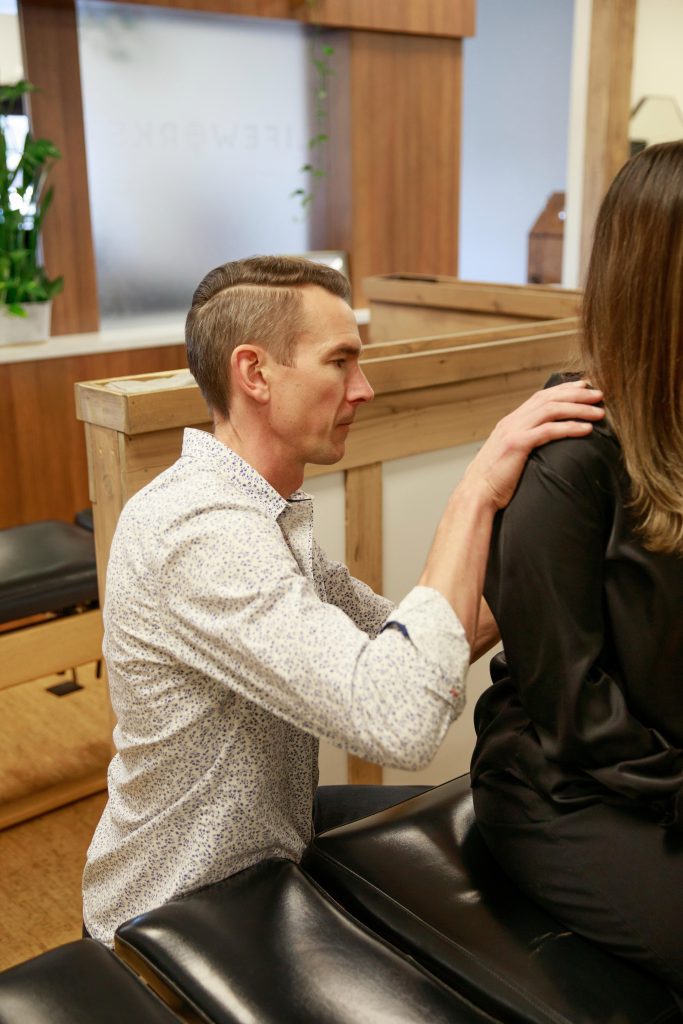
When the neck and shoulder do not move as they normally do, it can help to look beyond one muscle. Your cervical spine, shoulder blade, upper back, and surrounding muscles all contribute to movement.
Chiropractic Adjustments for the Neck are particularly relevant when neck movement feels stiff, strained, or uneven. LifeWorks describes this service around restoring comfortable neck movement when stiffness, strain, or tension affects how your head and shoulders move.
If the change appeared alongside training or sport, Sports Chiropractic may also be relevant. LifeWorks describes this service as focusing on how the body moves, carries weight, and supports an active lifestyle.
For people working on longer-term stability and movement, Chiropractic Wellness and Rehabilitation focuses on stability, confidence, and steady progress. The point is not to assume every neck or shoulder symptom needs chiropractic care.
Some conditions require medical, orthopedic, or other professional assessment. The value of an assessment is understanding which areas are involved and how they affect your normal function.
What Should You Track Before an Appointment?
A short activity record can make your history easier to explain. Write down when the change appears and what you were doing beforehand.
You can track:
- Time spent at a desk
- Recent training changes
- Overhead activities
- Sleep position
- Neck movements that feel different
- Shoulder movements that feel different
- Changes in strength
- Numbness or tingling
Keep the notes simple.
A clear timeline can help your provider understand the pattern.
FAQs
What does the levator scapulae muscle do?
The levator scapulae connects the upper cervical spine with the shoulder blade. Its main action is raising the shoulder blade. It also assists with neck extension, rotation, and side bending.
Where is the levator scapulae located?
It runs from the transverse processes of C1 through C4 to the medial border of the scapula.
Can desk work contribute to levator scapulae symptoms?
Long periods at a computer can increase demands on the neck and shoulder region. Repeated posture and limited movement may be relevant factors.
Does levator scapulae pain always come from the muscle?
No. Similar symptoms can involve the cervical spine, shoulder, nerves, or nearby muscles. A broader assessment can help identify the structures involved.
The levator scapulae is only one part of a much larger movement system. If your neck and shoulder keep moving differently, what might that wider pattern be telling you?