


Loss of feeling in the big toe is not just a local foot issue. It is often a signal that your nervous system is not communicating clearly with your body.
You might notice it first thing in the morning. Or while walking, when one step feels slightly “off.” At first, it is easy to ignore. But when it keeps coming back, most people start asking the same question.
Is this something small… or something deeper?
What Loss of Feeling in Big Toe Really Means
Your big toe plays a key role in balance and movement. Every step you take depends on clear nerve signals traveling from your brain to your foot and back again.
When that signal is reduced, delayed, or distorted, sensation changes.
At first glance, this may seem like a simple nerve issue in the foot. But your body does not work in isolated parts. Every signal travels through your nervous system, starting at the brain, moving through the spine, and reaching the extremities.
So when you notice loss of feeling in your big toe, you are often seeing the end result of a longer chain of dysfunction, not the starting point.
The System Behind It All: Your Nervous System
Your body is designed to be self-maintaining, self-adapting, and self-healing. This process is guided by what chiropractors often refer to as your innate intelligence, the system that coordinates healing and function automatically.
At the center of that system is your nervous system.
When it functions well, your body adapts smoothly. Movement feels natural. Balance is effortless. Signals are clear.
But when there is interference, your body starts compensating.
This interference is known as a Vertebral Subluxation Complex. It affects how your brain and body communicate. And over time, your body adapts around that interference.
That adaptation can show up in many ways. Reduced sensation in your toe is one of them.
Loss of Feeling in Big Toe: 6 Root Causes You Should Understand
1. Nerve Interference at the Spine
The nerves that supply your foot begin in your lower spine. If there is interference at that level, the signal can weaken before it ever reaches your toe.
This is why the symptom often feels far from the cause.
Neurologically focused chiropractors are the only professionals specifically trained to detect and address this type of nerve interference within the spine.
2. Peripheral Nerve Changes
In some cases, the issue lies further along the nerve pathway.
Peripheral nerves can become less responsive over time due to metabolic factors, stress, or long-standing patterns. This is where programs like Peripheral Neuropathy Relief in Kelowna can play a role.
However, even here, your overall nervous system function still influences how well those nerves perform.
3. Repetitive Movement Patterns
Your daily habits shape your body.
How you walk. How you stand. How long you sit.
Over time, these patterns affect how pressure is distributed through your feet and how nerves are stimulated. If the pattern is inefficient, your body adapts.
And sensation can gradually change.
4. Reduced Brain-Body Awareness
Sometimes the issue is not damage. It is a disconnection.
If your brain stops receiving clear feedback from your foot, it begins to reduce its attention to that area. The connection weakens.
This is why some people describe the feeling as “numb” or “not fully there.”
The good news is that this type of pattern can often be retrained when the system is addressed correctly.
5. Accumulated Stress on the Nervous System
Stress builds over time, and it is not just mental.
Your body adapts to three main types:
- Physical stress from posture or repetitive strain
- Chemical stress from diet or environment
- Emotional stress from daily life
When these accumulate, they can affect how your nervous system processes and delivers signals.
Your body adapts to survive. But those adaptations are not always ideal.
6. Lack of Direct Nervous System Correction
This is the missing piece for many people.
You can stretch. You can strengthen. You can adjust your habits.
But if the system controlling those actions is not functioning properly, results often fade.
That is why addressing the nervous system directly is where lasting change begins.
Why Focusing Only on the Toe Falls Short
Most people try simple fixes first.
“Maybe I need better shoes.”
“I should stretch more.”
“Let me massage it and see.”
These can help temporarily.
But if the pattern keeps returning, it usually means something deeper is driving it.
You are not just dealing with a toe issue. You are dealing with how your body is being controlled and coordinated.
The LifeWorks Approach: Addressing the Root Cause
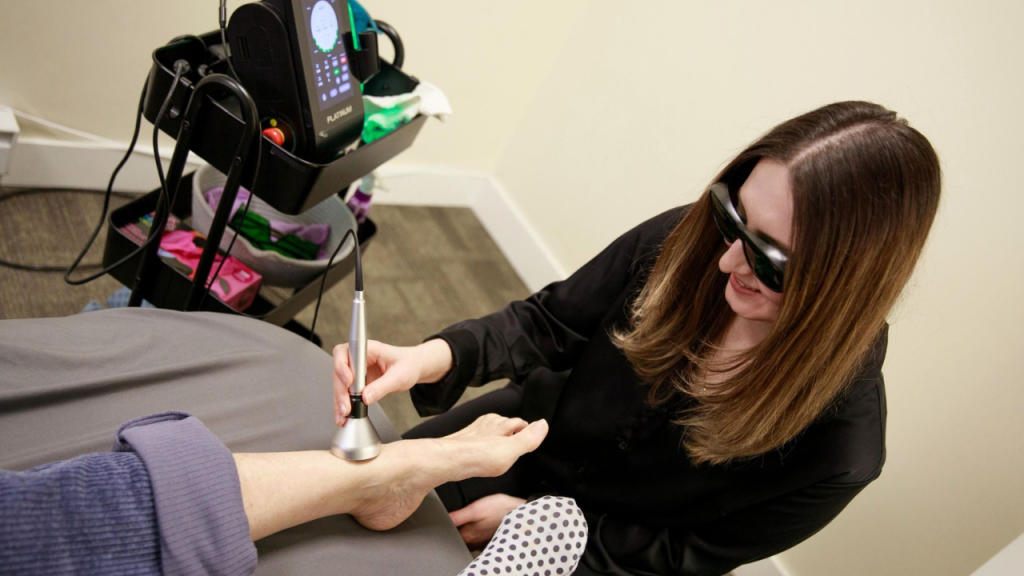
At LifeWorks Family Chiropractic, the focus is not on treating symptoms in isolation.
The focus is on restoring how your body functions as a whole.
Through structured Chiropractic Care, the team assesses how your nervous system and spine are working together. The goal is to identify where communication is not optimal and guide your body through Neuro-Spinal Re-habituation.
This is not a one-time fix.
It is a guided process of transformation, helping your body relearn how to adapt, respond, and function over time.
Patients at our Chiropractic care often begin this process after realizing that surface-level fixes are no longer enough.
How Neuro-Spinal Re-habituation Works
This process is structured and measurable.
It typically includes:
- Detailed assessment of nervous system function
- Identification of interference patterns
- Targeted chiropractic adjustments
- Ongoing progress tracking
- Support through movement and lifestyle changes
As your nervous system improves, your body begins to change how it functions.
Signals become clearer. Coordination improves. Areas that once felt disconnected begin to reintegrate.
Where Peripheral Neuropathy Fits In
If your symptoms involve reduced sensation, Peripheral Neuropathy Relief in Kelowna may be relevant.
It is important to understand this clearly.
Peripheral neuropathy involves nerve damage or dysfunction, often linked to conditions like diabetes, chemotherapy, or other systemic factors. It is not caused by spinal subluxation.
However, improving nervous system function can still support how your body adapts and responds overall.
That distinction keeps the approach both effective and medically responsible.
Real Decision Moments Most People Face
At some point, the questions become more direct.
“Why hasn’t this gone away yet?”
“Is this something deeper?”
“Do I need professional help?”
If the sensation has been there for weeks…
If it is spreading or becoming more noticeable…
If it keeps coming back despite your efforts…
That is usually when people realize it is time to look beyond surface-level solutions.
What Changes When Your Body Starts Functioning Better
As your nervous system becomes more efficient, your body begins to respond differently.
You may notice:
- Better awareness in your foot
- More stable balance when walking
- Smoother, more controlled movement
- Improved coordination overall
Some people also notice changes in how their body feels. But that is not the primary goal.
The real shift is how your body functions as a connected system.
Your Body Doesn’t Need Managing. It Needs Better Function
You can keep focusing on the symptom. Many people do.
Or you can start addressing how your body is actually working beneath the surface.
At LifeWorks Family Chiropractic, the focus is on helping your body relearn how to function, not just respond.
Through structured and supportive programs like Peripheral Neuropathy Relief in Kelowna, the goal is to reduce interference in the nervous system and support better communication throughout your body.
Because when your system starts working the way it was designed to, change does not feel forced. It starts to feel natural.
So here is the real question.
What would your day feel like if your body was fully connected, responsive, and working with you again?
Book your assessment with LifeWorks Family Chiropractic and start retraining how your body actually works.