


You can fix sway back posture by restoring how your body is controlled and coordinated, not by forcing yourself into a better position.
If your hips sit forward, your chest leans back, and your posture never seems to “stick,” your body is not broken. It is adapting. And once you understand why, the path to change becomes much clearer.
What Is Sway Back Posture and Why It Keeps Coming Back
Sway back posture shows up when your hips shift forward, your ribcage falls back, and your head drifts behind your body.
At first glance, it looks like a simple posture issue. But if that were true, stretching and exercises would fix it quickly. You may have already tried that.
So why does it keep returning?
Because posture is not just about muscles. It is controlled by your nervous system. This system runs your posture automatically, based on patterns your body has learned over time.
If the pattern is off, your body will keep repeating it, no matter how hard you try to correct it.
The Real Root Cause Most People Miss
Your body is designed to be self-maintaining, self-adapting, and self-healing. Every function is guided by what is often called your innate intelligence.
At the center of this system is your nervous system. It controls how your body moves, balances, and holds posture every day.
When there is interference in this system, often referred to as a vertebral subluxation complex, communication between your brain and body becomes less efficient.
This interference can come from:
- Physical stress (poor posture, injuries, repetitive strain)
- Chemical stress (diet, environment)
- Emotional stress (daily pressure, tension)
Over time, your body adapts around this interference. Sway back posture is often one of those adaptations.
So instead of asking only how to fix sway back posture, the better question is:
How do you restore the system that controls posture in the first place?
The LifeWorks Approach: Correcting the Root Cause
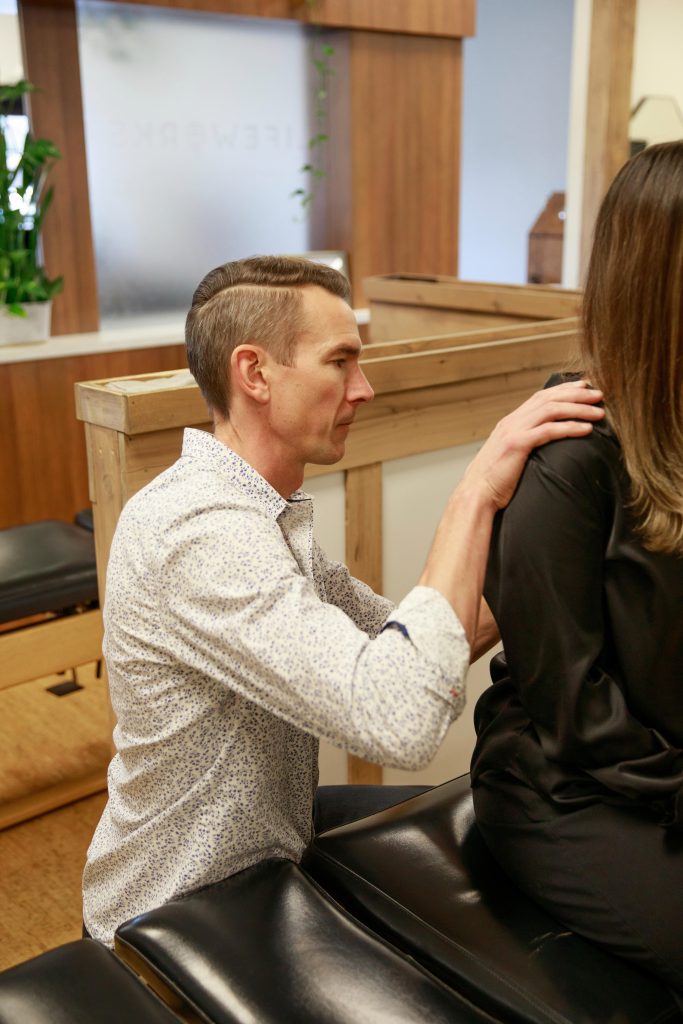
Many approaches focus on stretching, strengthening, or temporarily adjusting posture. That can help short term, but it does not always create lasting change.
At LifeWorks Family Chiropractic, the focus is different.
The goal is to identify and reduce interference in the nervous system so your body can return to a more natural, balanced state.
Through Chiropractic Care, this process is called Corrective Chiropractic, also known as Neuro-Spinal Re-habituation.
Think of it like braces for your teeth. You are not forcing a quick fix. You are guiding your body back into proper alignment over time.
This approach helps retrain:
- Brain-body communication
- Movement patterns
- Postural control
As this system improves, your posture begins to change naturally, not forcefully.
Many people exploring Chiropractic Care at Chiro Kelowna are looking for exactly this kind of long-term correction.
How to Fix Sway Back Posture: 6 Alignment Corrections That Work
1. Posture Is a Nervous System Output
Sway back posture is not just a habit. It is a pattern your nervous system has learned. You cannot force your way out of it. You need to retrain it. When your system gets better input and clearer signals, your posture starts to change from the inside out.
2. Restore Pelvic Awareness and Control
If you cannot feel your pelvis, you cannot correct it. This is about connection, not flexibility.
Try this simple reset:
- Stand with your back against a wall
- Gently tuck your tailbone to reduce the lower back gap
- Hold, release, and repeat 10 times
This helps your body relearn what neutral feels like.
3. Release Tight Hip Flexors
Tight hip flexors pull your pelvis forward and lock in sway back posture. Sitting all day makes this worse.
- Half-kneel and gently push hips forward
- Hold 30–45 seconds per side
- Repeat daily
Consistency here creates real change.
4. Reactivate Glutes and Deep Core
When sway back sets in, your glutes and core stop doing their job.
Start with:
- Glute bridges (3 sets of 12–15)
- Forearm plank (20–30 seconds, 3 sets)
These rebuild support, especially when paired with proper nervous system correction.
5. Change Your Daily Inputs
Your posture reflects what you do all day, not just your workouts.
Focus on:
- Sitting with feet flat and hips slightly back
- Standing in a stacked position
- Sleeping with proper support
- Keeping screens at eye level
These small changes reduce stress on your system and support long-term correction.
6. Address the Nervous System with Corrective Chiropractic Care
This is where real, lasting change happens.
At LifeWorks Family Chiropractic, posture correction goes beyond exercises. Through structured Chiropractic Care, patients go through Neuro-Spinal Re-habituation.
This process identifies and reduces interference in the nervous system, helping your body relearn proper alignment over time. Think of it like braces for your spine and nervous system.
As your system improves, your body begins to hold posture naturally. The exercises and habits you build start to stick because the underlying control system is working better.
Many people exploring Chiropractic Care at Chiro Kelowna notice improvements in how they move, adapt, and function daily. These are not the primary goal, but a natural result of a body working the way it was designed to.
What Changes When Your Body Starts Functioning Better
As your nervous system begins to function more efficiently and your body regains balance, your posture starts to improve without constant effort.
Many people notice:
- Easier, more natural standing
- Better movement control
- Improved coordination
Some may also notice changes in how their body feels day to day. But these are not the primary goal. They are a natural result of a body that is functioning the way it was designed to.
Why Many People Choose a Guided Approach
At some point, many people ask:
- “Why does my posture keep slipping back?”
- “Am I missing something deeper?”
- “Do I need expert guidance?”
If your body continues to fall into the same pattern, it often means the underlying system needs more than self-correction.
That is where LifeWorks Family Chiropractic comes in.
Through structured Chiropractic Care, our team focuses on assessing how your nervous system and spine are working together, identifying areas of interference, and guiding your body through a process of Neuro-Spinal Re-habituation so it can relearn how to function, not just hold a position.
This is why many people turn to Chiropractic Care at Chiro Kelowna when they are ready for a more complete, long-term solution.
The Real Question Moving Forward
You can continue trying to hold your posture in place. Many people do.
Or you can start addressing the system that controls it.
Because once your body learns how to align and move the right way, posture stops being something you think about.
It becomes something your body does naturally.
So the next time you notice your posture slipping, ask yourself:
Are you trying to fix the position, or are you ready to change the way your body actually works?
What If Your Body Held Alignment Naturally?
You can remind yourself to stand straight all day. Most people do. It works for a moment, then your posture slips back.
Maybe it’s not about discipline. Maybe it’s about how your body is being controlled beneath the surface.
At LifeWorks Family Chiropractic, the focus is on helping your body relearn how to function, not just hold a position.
Through structured Chiropractic Care, the goal is to reduce interference in the nervous system and support better alignment over time.
Ready to take the next step? Book your appointment and start retraining how your body actually works.
FAQs
1. How long does it take to fix sway back posture?
It depends on how long the pattern has been there and how your body has adapted. Some people notice changes in a few weeks, while others need a longer, consistent approach. The key is not speed, but retraining your body to hold alignment naturally.
2. Can sway back posture be corrected without professional help?
Mild cases can improve with awareness and consistent corrections. But if your posture keeps returning, it may indicate deeper nervous system patterns that need guided support.
3. What is the main cause of sway back posture?
It is usually a combination of poor movement habits, prolonged sitting, and changes in how the nervous system coordinates posture. Over time, the body adapts to these patterns and makes them automatic.
4. Is sway back posture a permanent condition?
No, it is not permanent. The body is adaptable. With the right approach that focuses on alignment, movement, and nervous system function, posture can improve over time.